Introduction: Why World Cup 2026 Matters More Than Ever
The world cup is not just the most prestigious football tournament on the planet—it is a global cultural phenomenon that shapes sporting history, national pride, and international unity. As the tournament prepares for its next edition, World Cup 2026 stands out as a historic milestone, marking the most significant transformation the competition has ever seen.
This article, published under the “tin bóng đá world cup” category, aims to provide a comprehensive, professional, and data-driven overview of the tournament, tailored specifically to the interests and expectations of American audiences. Whether you are a long-time soccer fan or a newcomer exploring the global appeal of the sport, this guide delivers tất cả những điều cần biết về World Cup 2026 cho người mới in a clear, structured, and authoritative manner.
At its core, this article answers one central question: World Cup 2026 là gì và có gì khác so với các kỳ World Cup trước—and why those differences matter to fans, analysts, and bettors alike.
1. What Is the World Cup? A Brief Academic Overview
The FIFA world cup is an international men’s football tournament organized by FIFA (Fédération Internationale de Football Association), held every four years since 1930. With the exception of interruptions during World War II, the tournament has grown into the most-watched sporting event globally, surpassing even the Olympic Games in viewership.
Key characteristics of the world cup include:
- Participation by national teams rather than clubs
- Qualification processes spanning all FIFA confederations
- A final tournament that crowns the world champion
- Massive economic, cultural, and geopolitical influence
World Cup 2026 represents a structural and strategic evolution of this legacy, designed to adapt the tournament to modern global football dynamics.
2. World Cup 2026 Is What? How It Differs From Previous Tournaments
World Cup 2026 là gì và có gì khác so với các kỳ World Cup trước
World Cup 2026 is the 23rd edition of the FIFA World Cup and introduces several unprecedented changes:
- First World Cup hosted by three countries
- First tournament featuring 48 national teams
- Largest number of matches in World Cup history
- Expanded global representation
These changes are not merely logistical—they reflect FIFA’s long-term vision to globalize football further, especially in emerging markets such as North America.
3. Host Nations and Timing: Where and When Will It Take Place?
giải bóng đá World Cup 2026 tổ chức ở đâu và khi nào
World Cup 2026 will be jointly hosted by:
- United States
- Canada
- Mexico
Tournament Schedule
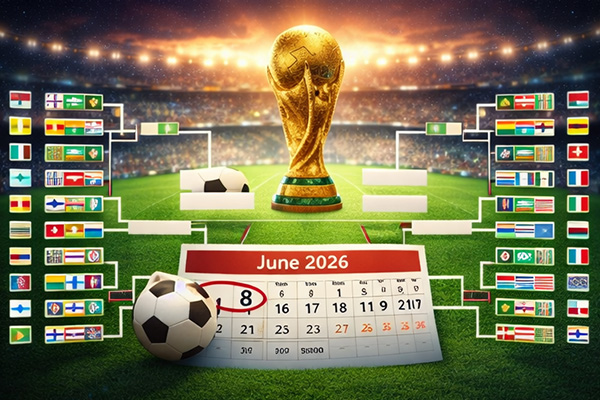
- Dates: June – July 2026
- Duration: Approximately 39 days
- Final Match: Expected mid-July 2026
Host City Distribution (Projected)
| Country | Number of Host Cities | Major Venues |
| USA | 11 | MetLife Stadium, SoFi Stadium, AT&T Stadium |
| Mexico | 3 | Estadio Azteca |
| Canada | 2 | BMO Field |
For American fans, this marks the second time the United States hosts the world cup (after 1994), but the first time in a shared-host format.
4. Tournament Format and Team Expansion Explained
thể thức thi đấu và số đội tham dự World Cup 2026
One of the most debated changes in World Cup 2026 is the expansion from 32 to 48 teams.
New Format Overview
- 48 teams
- 12 groups of 4 teams
- Top 2 teams + best 8 third-placed teams advance
- Round of 32 introduced
- Total matches: 104
Comparison Table: Old vs New World Cup Format
| Feature | World Cup 2018–2022 | World Cup 2026 |
| Teams | 32 | 48 |
| Matches | 64 | 104 |
| Group Size | 4 | 4 |
| Knockout Start | Round of 16 | Round of 32 |
This expanded format increases inclusivity while maintaining competitive balance—an important consideration for analysts and bettors tracking tournament trends.

5. Qualification Process and Global Representation
With more teams comes a broader qualification landscape:
- AFC (Asia): 8+1 slots
- CAF (Africa): 9+1 slots
- CONCACAF (North America): 6+2 slots
- CONMEBOL (South America): 6 slots
- UEFA (Europe): 16 slots
This significantly improves access for emerging football nations, enhancing the global narrative of the world cup.
6. Why World Cup 2026 Is Especially Important for the United States
For the American sports market, World Cup 2026 represents:
- Massive growth in soccer popularity
- Increased youth participation
- Commercial and broadcasting expansion
- Integration with sports betting culture
The U.S. hosting role aligns perfectly with rising MLS standards and international player influence.
7. Tactical Trends and Playing Styles to Watch
With more matches and teams, analysts expect:
- Greater tactical diversity
- More defensive setups from emerging nations
- Increased emphasis on squad rotation
- Data-driven match preparation
These factors heavily influence World Cup match predictions today, a core focus of the tin bóng đá world cup category.
8. World Cup 2026 and the Betting Landscape
World Cup 2026 will reshape the global betting ecosystem:
- Expanded match volume = more betting markets
- Increased unpredictability in group stages
- Value opportunities in underdog scenarios
For U.S. audiences, regulated sports betting markets make World Cup odds analysis more accessible than ever.
9. Everything New Fans Need to Know
tất cả những điều cần biết về World Cup 2026 cho người mới
If you are new to the world cup, here are the essentials:
- Matches are played every 4 years
- National teams qualify through regional tournaments
- Group-stage matches are followed by knockouts
- The final determines the world champion
World Cup 2026 is arguably the most beginner-friendly edition due to its expanded format and global accessibility.
10. SEO Perspective: Why World Cup 2026 Will Dominate Search Trends
From an SEO standpoint, world cup will remain one of the highest-volume sports keywords globally. Long-tail variations related to:
- Match predictions
- Betting odds
- Host cities
- Team analysis
…will drive sustained traffic throughout 2025–2026.
Conclusion: A Defining Moment in World Cup History
World Cup 2026 is more than a football tournament—it is a strategic reinvention of the world cup for a globalized, data-driven, and digitally connected era. With structural innovation, unprecedented scale, and strong alignment with the American sports market, it promises to redefine how fans experience international football.
For readers of the tin bóng đá world cup category, staying informed means not only following scores but understanding context, structure, and trends. World Cup 2026 delivers all three—on a scale never seen before.
Tôi đoán trận chung kết sẽ có ít nhất 3 bàn thắng.
Germany luôn chơi rất chắc chắn tại World Cup.
Một bàn thắng sớm sẽ thay đổi chiến thuật cả trận.
Brazil luôn khiến World Cup rực rỡ.
Theo mọi người thì cầu thủ nào sẽ trở thành “người hùng bất ngờ” ở World Cup 2026?